How to Remove Salt Stains from Your Car’s Undercarriage Safely
How to Remove Salt Stains from Your Car’s Undercarriage
Road salt is commonly used during winter months to improve driving safety, but it can quietly damage your vehicle if left untreated. Learning how to remove salt stains from your car’s undercarriage is an essential part of responsible vehicle ownership, especially in colder climates where salt exposure is frequent.
Salt buildup traps moisture against metal surfaces, increasing the risk of corrosion over time. Proper cleaning helps protect structural components, brake lines, and suspension parts that are not always visible during routine inspections.
Why Salt Stains Form Under Your Vehicle
Salt residue accumulates when snow, slush, and road spray dry underneath the car. These deposits harden over time and bond to metal surfaces. Without regular car undercarriage cleaning, salt can slowly weaken protective coatings and accelerate rust development, even on newer vehicles.
Step-by-Step Process to Remove Salt Stains Safely
-
Rinse Thoroughly
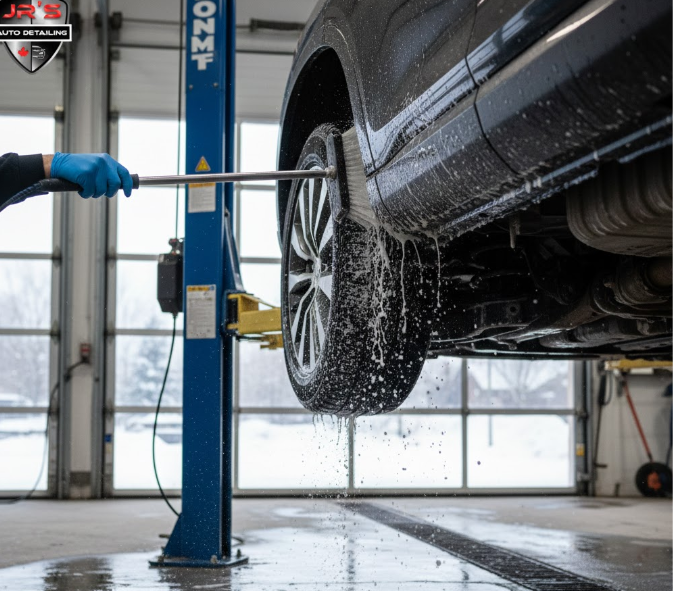
Use a low-pressure hose or undercarriage spray attachment to loosen salt deposits. Warm water helps dissolve residue more effectively than cold water. -
Apply a pH-Balanced Cleaner
Automotive-safe cleaners are designed to break down salt without harming rubber seals or metal components. This step supports long-term salt corrosion prevention. -
Allow Proper Dwell Time
Let the cleaner sit briefly to lift stubborn stains, avoiding extended drying. -
Final Rinse and Dry
Rinse completely and allow the undercarriage to air-dry. Proper drying reduces trapped moisture that can cause corrosion.
For drivers seeking consistent protection, professional auto detailing Edmonton providers often include underbody rinsing as part of seasonal maintenance packages.
When Professional Care Makes Sense
If salt exposure is heavy or stains are persistent, professional auto detailing services near me can provide deeper cleaning using lifts and specialized tools. These services reach areas that are difficult to access at home and help maintain factory protective coatings.
Some vehicle owners also consider long-term protection options such as graphane coating Edmonton, which may help reduce moisture contact on treated surfaces when applied correctly.
How Often Should You Clean the Undercarriage?
During winter, cleaning every two to three weeks is reasonable for most drivers. Regular attention supports overall winter car maintenance and reduces the likelihood of costly repairs caused by hidden corrosion.
Understanding how to remove salt stains from your car’s undercarriage allows you to protect your vehicle’s lifespan, safety, and resale value with simple, informed care choices.
Final Thoughts
Salt damage develops gradually, often out of sight. Routine undercarriage care, combined with safe cleaning practices and professional support when needed, helps maintain your vehicle’s condition throughout harsh seasons. Staying proactive ensures your car remains reliable well beyond winter driving conditions.
Post a comment